Sometimes, life in Japan feels like a quiet movie — the soft hum of cicadas in summer, the calm trains arriving right on time, the polite bows and unspoken rules. It’s peaceful on the surface, yet deep inside, many of us carry invisible weights — old wounds, broken promises, and words that still echo in our hearts.
In my previous post about “Inspired Destiny” by Dr. John Demartini, we talked about finding our purpose — that spark that gives meaning to everything we do. But what I’ve come to realize is that you cannot fully live your inspired destiny if your heart is still chained by resentment.
And that’s what this post is all about.
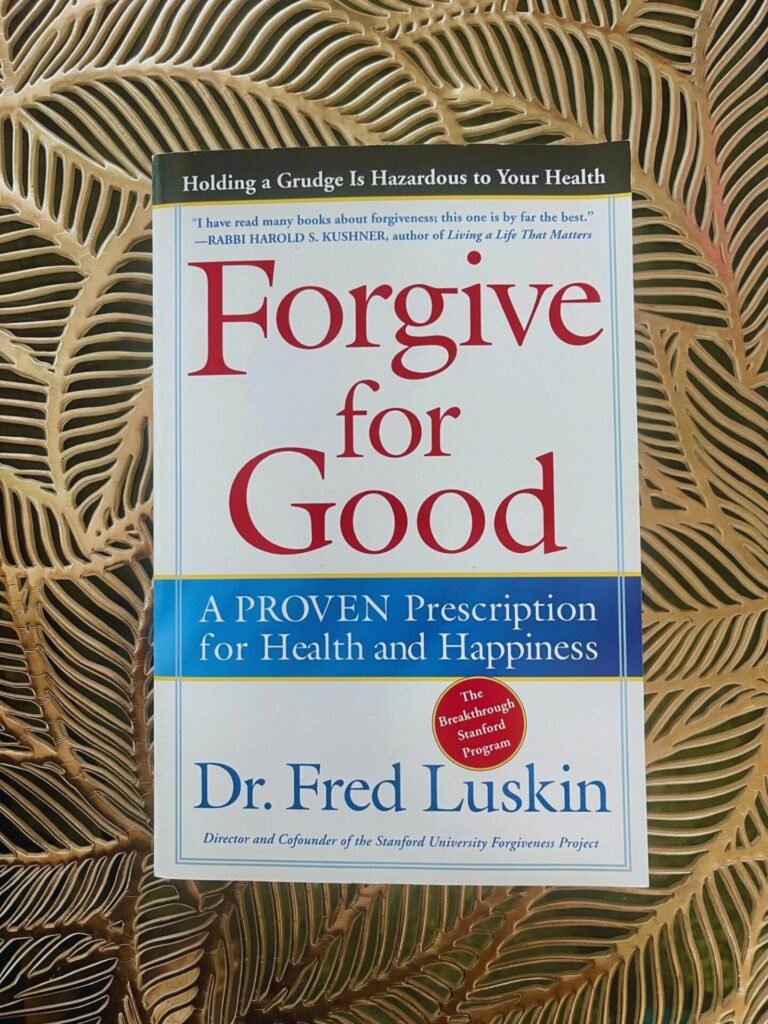
Recently, I came across “Forgive for Good” by Dr. Fred Luskin, a book that doesn’t just talk about forgiveness as a moral duty — but as a science-backed act of self-healing. It completely reshaped how I see forgiveness, pain, and freedom. Especially as someone living far from home, facing cultural challenges, emotional scars, and a past that sometimes visits me when life grows quiet.
The Science of Letting Go
Dr. Fred Luskin is not only a psychologist — he’s a researcher who has studied how forgiveness literally transforms our bodies and minds. His work at Stanford University shows that holding onto anger or grudges activates our body’s stress response, flooding us with adrenaline and cortisol — the same chemicals our body releases when we’re in danger.
It means that every time we replay a painful memory, our body relives it as if it’s happening right now.
When I read that, I paused. Because I realized — I had been doing this for years.
When I came to Japan, I was full of hope. A new life, a new country, a family of my own. But life didn’t unfold the way I had dreamed. There were betrayals I never saw coming, loneliness that cut deeper than I could express, and days when I questioned my own worth.
Every time I remembered those moments — the words that broke me, the nights I cried alone while my children slept — my body reacted as if it was all happening again. I didn’t realize I was keeping myself in the same emotional storm.
Dr. Luskin calls this the “grievance story” — the tale we tell ourselves over and over: What happened to me. How unfair it was. How much it hurt.
The more we repeat it, the more power it has.
And the longer we stay trapped.
That realization was painful… but also freeing. Because it meant that if I could change the story, I could change my life.
Forgiveness is Not About Them — It’s About You
One of the most beautiful insights from “Forgive for Good” is that forgiveness doesn’t mean saying, “what you did is okay.” It means saying, “I won’t let what you did control me anymore.”
That struck a deep chord in me.
I used to think forgiving someone meant erasing the pain or pretending it didn’t happen. But forgiveness doesn’t erase — it reframes. It teaches us to look at our pain not as something that defines us, but as something that refines us.
Here in Japan, I’ve met many people who carry their pain quietly — behind polite smiles and gentle words. It made me realize that strength isn’t always loud. Sometimes, it’s in the calm acceptance that life can be unfair, yet we choose to remain kind.
Forgiveness, I learned, is the same.
It’s not dramatic. It’s quiet. It’s steady. It’s the choice to breathe again — even when your heart still trembles.
Dr. Luskin’s research shows that forgiveness can reduce depression, lower blood pressure, and even boost immunity. But more than that, it restores your emotional energy. It gives you back your power.
And as I started practicing it, I noticed small changes — I laughed more with my daughters, I found beauty again in ordinary things, and I felt the weight on my shoulders begin to lift.
That’s when I understood — forgiveness is not a gift you give others.
It’s a gift you give yourself.
The Day I Chose Peace
There was a particular day — I still remember — when I was standing in the park, looking at the cherry blossoms outside. They were falling softly, one petal at a time, like tears from the sky.
I had just received some painful news that reopened old wounds. I felt anger rise within me — the kind of anger that makes your hands shake and your heart race. But then, something in me whispered:
You’ve suffered enough. Let it go.
And in that moment, I made a quiet promise to myself — that I would no longer let my past dictate my peace.
Forgiveness didn’t happen overnight. It took tears, prayers, journaling, and gentle reminders from mentors like Dr. Luskin and Joel Osteen. But slowly, I felt myself returning to me.
It’s strange how forgiveness works — it doesn’t change what happened, but it changes how it lives within you.
Dr. Luskin’s studies showed that people who forgive feel lighter, freer, and more hopeful. I can say from experience — that’s true. I started to see my pain as a teacher, not a curse.
It taught me strength. It taught me compassion. It taught me that healing is not forgetting, but remembering with peace.
How I Practice Forgiveness Now
Forgiveness is not a one-time act; it’s a daily choice.
Here’s how I’ve been living it — inspired by Dr. Luskin’s practical steps and my own personal journey:
- I acknowledge my pain. I no longer hide it or pretend I’m okay. I talk to myself gently — “Yes, that hurt. But you’re healing.”
- I identify what I lost. Whether it’s trust, time, or self-confidence, I name it. Because only by naming our pain can we truly understand it.
- I stop replaying the story. When the same thoughts start circling, I breathe and focus on what’s happening now. Maybe I’ll look at my children’s faces — their laughter reminds me that life goes on beautifully.
- I choose peace over being right. Some battles aren’t worth winning if it costs you your peace.
- I practice gratitude. Every night, I write down three things I’m thankful for — even if it’s just a warm cup of tea or a quiet walk under the autumn leaves.
Forgiveness, I’ve learned, is not weakness. It’s emotional courage. It’s saying, “I deserve to feel free again.”
You Are Not Alone
If you’re reading this and carrying a wound that still aches — maybe from a broken relationship, a lost dream, or a betrayal you can’t talk about — I want you to know: you are not alone.
I’ve been there. I’ve cried those tears.
And I promise you — there is light after the dark.
Forgiveness doesn’t happen because we suddenly stop hurting. It happens because we finally realize that we deserve peace more than we deserve revenge.
Here in Japan, I’ve learned that beauty can grow even from pain — like cherry blossoms blooming after winter. Forgiveness is that kind of beauty. It’s fragile, gentle, but powerful enough to change everything.
Final Thoughts
Dr. Fred Luskin’s book, “Forgive for Good,” taught me that forgiveness is not just a moral idea — it’s a healing practice. It’s both science and soul.
And when combined with the lessons from “Inspired Destiny” by Dr. John Demartini, I’ve come to understand this:
You cannot step fully into your destiny while your heart is still shackled by bitterness.
Forgiveness breaks the chain.
It allows love, purpose, and new beginnings to enter again.
It doesn’t change what happened.
But it transforms the way the past lives within you.
And that, my friend, is how we heal — and how we rise.