After opening my heart in my previous post, “Why God’s Timing Was Never Late — Even When I Felt Abandoned,” something inside me began to soften in a way I never expected. It was subtle at first — like a quiet whisper during my morning drive going to work, or a tender warmth sinking into my chest while folding laundry in our little home in Japan. Healing didn’t arrive with fireworks or grand moments. It came gently… slowly… almost like a miracle unfolding softly behind the scenes of my everyday life.
And then something happened that I never saw coming.
My marriage — the very part of my life that carried so much heartbreak, confusion, and exhaustion — began to breathe again.
A door that had been shut for years suddenly cracked open.
A man who felt so distant started inching closer, not perfectly, not magically transformed, but willing. And that willingness alone felt like a blessing.
To be honest, I never imagined we would be here.
Two imperfect people, with scars and stories that once tore us apart, quietly trying again. Step by step. Conversation by conversation. Moment by moment. Hoping that this time, instead of breaking, our hearts would finally meet in a safer, gentler space.
And right in the middle of this sacred, fragile chapter… God handed me a guide.
A book.
A reminder.
A lifeline.
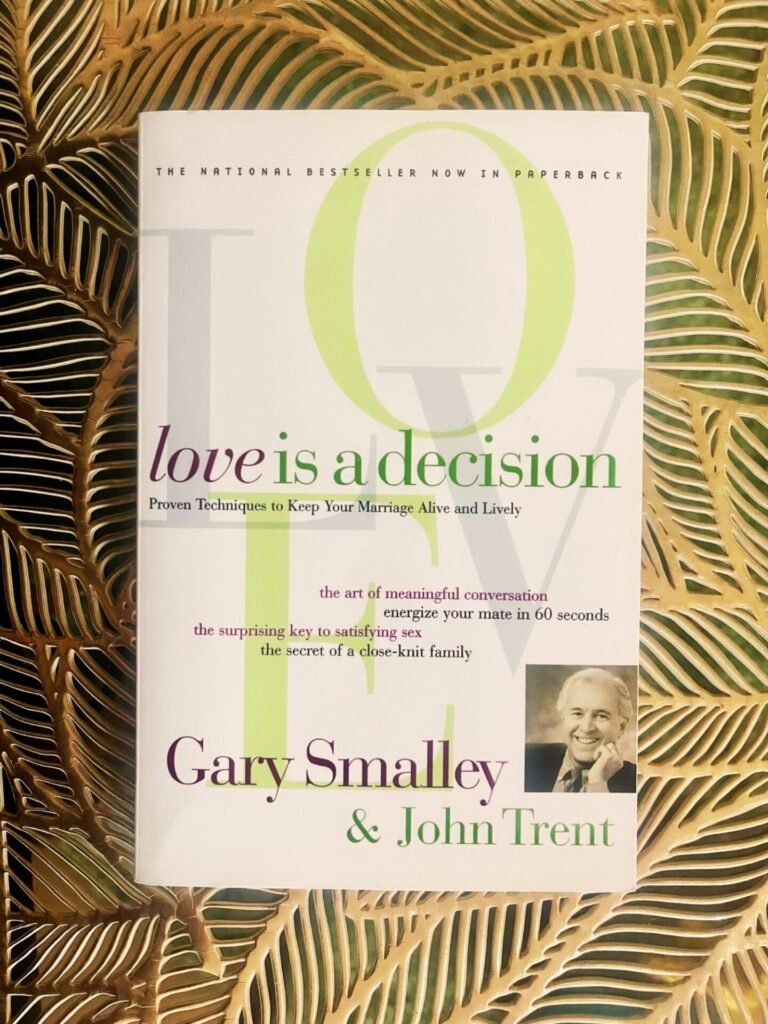
Love Is a Decision arrived at the exact moment when I felt too inexperienced, too wounded, and too unsure of how to rebuild what we lost. It wasn’t just a book of techniques — it felt like someone handing me a compass when I didn’t even know which direction to face anymore.
It reshaped the way I understand love.
It challenged the way I communicate.
It revealed blind spots I didn’t know were hurting my marriage.
And more than anything, it reminded me that love doesn’t thrive because life is easy — it survives because we choose it even when it’s not.
This book didn’t just give me hope…
It gave me courage.
Clarity.
And a renewed sense of purpose as a wife, a mother, and a woman who still believes that healing is possible even after years of brokenness.
And today, I want to pass that same hope to you.
Whether your marriage feels strong but needs nurturing, or fragile and in need of gentle hands… or whether you’re standing at the edge, wondering if love can still be saved — I want to share with you the lessons that have been transforming my own heart.
Below are the teachings that touched me deeply, reshaped with my own experiences, and written for everyone who longs to strengthen, mend, or simply understand their relationship with more grace and intention.
Because love doesn’t just happen.
We build it — one decision at a time.
1. Love Is Not a Feeling — It’s a Daily Choice
If there is one truth from Love Is a Decision that shook me to my core, it’s this:
love doesn’t survive because we feel it… it survives because we choose it.
For most of my life, I grew up believing that love was an emotion — something that rises when life is sweet and disappears when things become painful. Maybe that’s why I felt so confused when the excitement faded, when the romance was drowned by responsibilities, and when what used to feel effortless suddenly became heavy and complicated.
Marriage has seasons.
Some are full of warmth, connection, and soft moments that remind you why you fell in love in the first place.
But others… oh, others are harder.
There are days when you feel unseen.
Days when words hurt more deeply than they should.
Days when exhaustion replaces tenderness, and the home feels quiet not because it’s peaceful, but because both hearts are tired.
And it’s in those seasons — not the easy ones — where the real test of love happens.
The book helped me understand something I wish I had known earlier:
Strong marriages aren’t built on never-ending romance… they’re built on intentional acts of love.
Not grand gestures.
Not constant fireworks.
But the simple, meaningful choices we make every single day:
- choosing kindness when irritation feels easier
- choosing patience when our partner doesn’t meet our expectations
- choosing to listen even when we feel tired
- choosing respect even in disagreement
- choosing forgiveness even when the pain whispers otherwise
It taught me that love grows because we water it, not because we always feel inspired to tend to it.
When I looked at my own marriage, I realized how often I equated fading feelings with fading love. There were moments when I silently wondered,
“If my heart doesn’t feel the same… does that mean love is gone?”
But this book opened my eyes to a truth that brought me comfort and courage:
Real love isn’t measured by how perfect the good days feel,
but by how committed we remain on the hard ones.
It’s easy to love when everything is harmonious.
But choosing love when your heart feels fragile, misunderstood, or exhausted — that’s where deeper love is forged.
It’s in the storms that commitment becomes visible.
It’s in the struggles that character is shaped.
It’s in the difficult days that true love proves its strength.
And realizing this didn’t just change the way I see marriage —
it changed the way I show up in mine.
It reminded me that love is not something we fall into…
It’s something we rise into, again and again, through deliberate choices made with humility and hope.
2. Honor Is the Foundation of Emotional Safety
One of the most eye-opening lessons from Love Is a Decision is the idea that honor is the oxygen of a healthy marriage. Without it, a relationship slowly suffocates. With it, love breathes again.
Honor isn’t a word we use often in daily life, but its meaning is powerful:
It’s the act of valuing your partner — not just in the big moments, but in the small, ordinary ones where real life happens.
Before reading this book, I used to think that emotional closeness came from spending time together or simply talking more. But this book helped me see something deeper:
People open their hearts only in places where they feel safe, respected, and cherished.
This hit me hard because, without realizing it, my marriage had lost that sense of safety.
Years of stress, misunderstandings, and unspoken hurts slowly built invisible walls between us. Even though we were under the same roof, our hearts lived in different rooms.
The book reminded me that emotional safety grows from honor — the daily practices that quietly say, “You matter. Your feelings matter. Your heart matters.”
Honor looks like:
- choosing gentle words when you’re frustrated
- listening without rolling your eyes or walking away
- showing appreciation for even the smallest efforts
- treating your partner’s thoughts with respect
- avoiding hurtful jokes, sarcasm, or comparisons
And you know what moved me the most?
Honor doesn’t require perfection — it requires intention.
Living in Japan taught me a lot about this, even outside my marriage.
Here, people bow as a sign of respect, apologize with sincerity, and speak with calmness even when their day is difficult. There is a quiet dignity in the culture — a gentleness that reminds me how powerful kindness can be.
When I applied that same softness to my marriage, even in tiny ways, I noticed something shift.
My husband’s tone became calmer.
Our conversations lasted a little longer.
The tension in the home eased.
It wasn’t magic — it was honor.
The book made me understand that a marriage without honor becomes a place of tension,
But a marriage with honor becomes a safe haven where both hearts can breathe.
And here’s the truth that brought me to tears:
Love cannot grow where fear exists,
But it flourishes where honor lives.
When we learn to honor each other — even through disagreements, disappointments, or past wounds — we slowly rebuild the trust that life once took away.
Honor doesn’t erase the past.
But it creates a future where healing becomes possible.
3. Understanding Your Partner’s Needs Makes Love More Meaningful
One of the most transformative truths Love Is a Decision revealed to me is that love becomes easier when we understand what our partner truly needs — not what we assume they need.
It sounds simple, but most conflicts in marriage don’t come from a lack of love…
They come from unmet needs we didn’t even realize existed.
The authors explain that every person carries a unique emotional “blueprint” — shaped by childhood, culture, personality, past experiences, and even quiet fears we rarely talk about. And because of that, what makes one person feel loved may not mean much to another.
For so long, I believed I was showing love in the best way I knew how.
But reading this book made me pause and ask myself something I had never truly considered:
“Am I loving my husband in a way I understand… or in a way he understands?”
That question humbled me.
I realized how often I gave affection when he needed appreciation.
How often I offered solutions when he needed empathy.
How often he sought respect, while I sought reassurance.
How often we were both trying — just not in a way the other could feel.
It was like discovering that we had been speaking different emotional languages all along.
And isn’t that what so many marriages struggle with?
The book breaks this down gently, explaining that every partner has their own core emotional needs. Some need:
- to feel appreciated and recognized
- to feel understood and listened to
- to feel special, chosen, and prioritized
- to feel secure and emotionally supported
- to feel respected and acknowledged
When these needs are met, the heart softens.
When they are ignored — even unintentionally — distance forms.
Living in Japan made me understand this on an even deeper level.
Every day I watch how people here pay attention to small details: the way they fold packages neatly, the way they listen fully without interrupting, the way they notice subtle emotions others might overlook.
It’s a culture that thrives on sensitivity — on seeing beyond the surface.
And marriage needs that same sensitivity.
We need to see, not just look.
We need to hear, not just listen.
We need to understand, not just assume.
When I started paying attention to my husband’s real needs — not the ones I imagined — the atmosphere between us changed.
I noticed he opened up more when I acknowledged his efforts, no matter how small.
He became gentler when he felt respected, not corrected.
He relaxed when he felt appreciated, not compared.
In return, he slowly began to understand what I needed too — affection, reassurance, emotional presence.
It wasn’t dramatic.
It wasn’t instant.
But it was real.
The book helped me realize something beautiful:
Love deepens when we stop loving from our comfort
and start loving from their need.
Understanding your partner’s emotional blueprint doesn’t mean losing yourself or giving up your own needs — it simply means learning how to hold their heart with more awareness and grace.
And when two people both try to understand each other’s needs…
Marriage transforms from a place of confusion
into a place of connection.
4. Healing Requires Forgiveness — Not Forgetting, but Releasing
Among all the lessons I learned from Love Is a Decision, the one that struck the deepest was this:
forgiveness is not a single moment… it is a journey of releasing what is weighing down your heart.
The authors explain something many of us misunderstand — we think forgiveness means erasing the past or pretending the hurt didn’t happen.
But that’s not forgiveness.
That’s denial.
And denial never brings true healing.
Forgiveness, the book teaches, is something very different.
It is the quiet courage of freeing yourself from the emotional burden that steals your peace, your hope, and your ability to love again.
It’s not instant.
It’s not easy.
And it doesn’t happen without tears, honesty, and humility.
But it is possible — and more importantly, it’s necessary.
This lesson came to me at a time when my heart still carried bruises from years of unspoken pain.
There were wounds in my marriage I didn’t know how to look at, let alone heal.
Sometimes I held onto them because they justified my hurt.
Sometimes I held onto them because I felt too fragile to let them go.
And sometimes… I held onto them because releasing them felt unfair — like I was saying the pain didn’t matter.
But the book gently reminded me:
Forgiveness doesn’t excuse what happened.
It simply frees you from being chained to it.
I realized that every time I kept replaying the past, my heart stayed stuck in the same broken place.
Forgiveness wasn’t for him alone — it was for me, too.
For my peace.
For my emotional clarity.
For my ability to love without fear or resentment controlling my reactions.
And here’s the truth the book highlighted beautifully:
Forgiveness and trust are not the same thing.
Forgiving someone does not mean instantly trusting them again.
Trust takes time, consistency, and changed behavior.
Forgiveness simply opens the door for that possibility.
When I finally understood this, I felt something lift — like a weight I didn’t realize I was carrying.
I didn’t have to rush my healing.
I didn’t have to ignore the pain.
I simply had to loosen my grip on it so something new could grow in its place.
In Japan, I’ve seen how the seasons paint such gentle metaphors of letting go.
Autumn leaves fall without resistance.
Cherry blossoms bloom and scatter without clinging.
Nature reminds us that release is part of renewal.
Forgiveness works the same way.
It doesn’t erase the scars.
But it transforms what they mean.
They no longer define you —
they become reminders of how far you’ve come.
And slowly, as forgiveness takes root, something incredible happens:
your heart becomes softer, not weaker…
your marriage becomes safer, not perfect…
and the possibility of healing becomes real again.
Because love cannot fully grow in a heart crowded with unresolved pain.
But the moment forgiveness enters — even quietly —
the heart finally has room to breathe.
5.) Building a Happy Marriage Requires Intentional Affection
One of the most comforting lessons this book shared is that affection doesn’t disappear on its own — sometimes, we simply stop watering it.
Life gets busy.
Bills pile up.
Children need us.
Work drains us.
Old hurts echo in the background.
And before we even realize it, the tenderness we once shared with our spouse begins to fade like a quiet sunset we didn’t notice slipping away.
The authors reminded me of something simple but powerful:
A happy marriage doesn’t grow by accident —
it grows because affection is given on purpose.
Not only when we “feel” loving.
Not only on anniversaries or special occasions.
But every day… in small ways that say,
“You still matter. You still are my person.”
This hit me deeply because I know how easy it is to become two people living in the same house, doing life side by side, but no longer touching each other’s hearts.
Sometimes, affection becomes awkward.
Sometimes, we hold back because we feel hurt, or shy, or afraid of being rejected.
And sometimes, we convince ourselves it’s “not the right time” to be sweet —
but the truth is, there’s no wrong time to show love.
The book beautifully explained that affection is not just physical.
It’s emotional warmth.
It’s attention.
It’s gentleness in our tone.
It’s reaching out before the distance grows too wide.
And as for me, this changed how I saw affection forever.
There were seasons in my marriage when I felt disconnected, almost like we were strangers trying to navigate the same storm.
But I noticed that whenever one small gesture was made —
a soft touch on the arm, a sincere “Good morning,” a shared laugh, a warm hug that lasted more than a second —
the atmosphere between us softened, even if just a little.
Because affection breaks walls quietly.
It melts tension.
It calms fears.
It reminds us that despite everything, we’re still choosing to walk together.
Intentional affection isn’t always easy, especially when the heart is tired or the past is heavy.
But every small act becomes a thread that slowly stitches closeness back into the marriage.
A gentle hand reaching out.
A smile that says, “I see you.”
A moment of kindness that breathes life back into love.
Over time, these tiny moments become the foundation of a marriage that feels warm, secure, and alive again —
not because everything is perfect,
but because both people are trying, choosing, and showing love in ways that truly matter.
6. A Closed Spirit: The Silent Destroyer That Can Break Even the Strongest Marriage
One of the most eye-opening chapters in the book talked about something many couples overlook — not yelling, not arguing, not money, not differences.
But a closed spirit.
The authors shared a heartbreaking story of a husband who called Gary Smalley late at night, desperate for help.
His wife had completely shut down.
She wouldn’t talk to him.
She wouldn’t talk to anyone connected to him.
She even had a court order keeping him away from their home.
And what struck me wasn’t just the drama of the situation — it was the emotional truth behind it:
Once a person’s spirit closes, love no longer flows in or out.
It doesn’t matter how many apologies are made.
It doesn’t matter how many promises are spoken.
A closed heart cannot hear love.
It cannot feel love.
It cannot give love.
And as I read this story, I felt a deep ache inside me — because I knew exactly what that meant.
There were seasons in my marriage, especially here in Japan, when I felt my own spirit closing little by little.
Not suddenly.
Not dramatically.
Just slowly… quietly… silently.
A hurtful word that lingered too long.
A need left unacknowledged.
A fear misunderstood.
A tear overlooked.
A moment when I wished he held me, but he didn’t notice.
Each small pain became a tiny brick.
And before I knew it, I had built walls I never meant to build.
I didn’t slam doors.
I didn’t yell.
I didn’t even argue.
I simply shut down.
Not to punish him —
But because I didn’t feel safe anymore.
And that’s what the book explains so beautifully:
A closed spirit isn’t anger.
It’s exhaustion.
It’s self-protection.
It’s the last defense of a heart that feels unheard and unseen.
And when a spouse reaches that point, even love struggles to reach them.
But here’s what moved me:
The authors didn’t stop at describing the problem.
They gently showed how a closed spirit can open again — not through pressure, not through guilt, not through forced apologies, but through genuine, patient, humble love.
A spirit opens only when it feels:
• safe
• respected
• valued
• listened to
• gently pursued
• never forced
• consistently shown love over time
And this truth touched my life personally.
I remember moments when my husband tried to talk to me, but I couldn’t respond.
I was too overwhelmed.
Too hurt.
Too drained from carrying the weight of our struggles alone.
And I also remember moments when his spirit closed too — when he felt judged, misunderstood, or dismissed.
We both had seasons of silence.
Seasons when we were together physically but miles apart emotionally.
Seasons when we spoke only out of obligation, not connection.
But somewhere along the way, something softened.
Maybe it was timing.
Maybe it was grace.
Maybe it was the prayers I cried in the quiet nights when the girls were asleep.
Maybe it was simply God’s way of telling us, “It’s not over.”
Because slowly… gently… our spirits started to open again.
Not because everything was fixed.
Not because trust magically returned.
Not because the pain vanished.
But because little acts of love began to feel safe again.
A softer tone.
A longer hug.
A small apology.
A shared moment of laughter.
A willingness to sit and talk without judgment.
A conversation where listening mattered more than winning.
This is what the book teaches so powerfully:
A closed spirit can reopen —
but only through tenderness, patience, humility, and genuine love.
And as I reflect on our marriage now, I see how true that is.
Reopening our hearts didn’t happen in one grand moment.
It happened in small, steady steps — the kind that take courage even when you’re scared.
It’s the gentle “I’m here.”
It’s the honest “I want to try again.”
It’s the tender “Your heart matters to me.”
And slowly, the walls began to crack enough for light to enter.
Because love can reach a closed spirit —
but only when we choose to love with softness instead of force,
with grace instead of pressure,
with humility instead of pride.
And sometimes…
that gentle love becomes the miracle that turns a broken marriage into a second chance.
7. The Tremendous Value of a Man
There was a story in the book that made me pause — not because it was dramatic, but because it was painfully familiar.
The authors described a moment when a couple walked into a marriage group, and instantly, the whole room felt the tension.
The husband burst in with anger written all over his face.
The wife walked in with swollen, tearful eyes.
Two people, sitting only a few feet apart… yet worlds away from each other.
And as I read that scene, I couldn’t help but reflect on how many marriages quietly carry that same invisible distance.
A man exhausted by the weight he never speaks of.
A woman hurting from the loneliness she can’t put into words.
Both longing for connection, yet too wounded, too frustrated, or too overwhelmed to reach out.
What the book pointed out next shook me gently but deeply:
Many men do not realize the tremendous value they carry —
and many wives do not realize how deeply men feel, even when they don’t show it.
Men often carry stress silently.
They bury pressure behind a tough face.
They hide fear behind anger.
UThey protect themselves with silence.
They mask insecurity with frustration.
And when they feel unappreciated or misunderstood, their spirit can collapse inward — just like a woman’s does.
But here is the truth the book highlighted so beautifully:
A man’s heart is far more sensitive than he lets on.
A man’s confidence often depends on feeling respected and valued.
And when a man feels unimportant, his entire spirit can shut down.
This made me reflect on my own marriage.
Living in Japan, far from my comfort zones, far from the support I once had back home, I became so focused on survival that I sometimes forgot how deeply my husband also struggled.
Behind the cultural pressures, the long hours, the expectations, the responsibilities he carried as a man — he was quietly drowning too.
And I was drowning in my own pain.
Two people hurting, side by side, but unable to see each other’s wounds.
There were moments when my husband reacted harshly or shut down completely, and I took it as coldness.
But reading this book made me understand something I never understood before:
A man’s anger often hides fear.
A man’s silence often hides shame.
A man’s harshness often hides insecurity.
And a man’s distance often hides pain.
It doesn’t excuse harmful actions — but it explains the emotional battle beneath them.
The story in the book ended with the authors gently guiding that angry husband to open up, not with confrontation, but with understanding.
Slowly, his walls softened.
Slowly, his spirit opened.
Slowly, he admitted that behind the anger… he was hurting because he didn’t feel valued.
That moment taught me a powerful truth:
Men need to feel cherished too.
They need affirmation.
They need appreciation.
They need emotional safety just as much as women do.
And when a man feels respected, admired, and valued — his spirit becomes stronger, his love becomes softer, and his presence becomes more tender.
This truth reshaped something in my heart.
Because for so long, I carried the weight of being hurt.
I carried the weight of being unappreciated.
I carried the weight of feeling abandoned emotionally.
But I never paused to see how heavy his burdens were too.
Understanding the tremendous value of a man helped me become more compassionate — not because everything was suddenly okay, but because I finally saw him as more than the mistakes we both made.
I saw him as a human being trying his best, even when his best wasn’t perfect.
I saw him as someone who needed healing too.
I saw him as someone whose spirit had also been wounded by life, by stress, by misunderstandings, by silence.
And slowly, this understanding helped soften the atmosphere of our home.
Because when a woman learns to speak life into a man’s spirit —
to appreciate him,
to encourage him,
to acknowledge his efforts,
to see him not as the enemy but as a partner —
a man begins to stand taller, love deeper, and show up with a heart more open.
Not because she fixed him.
But because she made him feel seen.
And I realized something I wish I understood earlier:
When a man feels valued,
he becomes the man he was meant to be —
and love becomes safer, stronger, and more alive.
8. The Sunlight of Security: Why Love Needs Safety to Truly Grow
One thing this book reminded me is how fragile the human heart becomes when love feels unsafe. We often think that arguments hurt us because of the words spoken—but sometimes it’s the small actions, done in anger, that cut the deepest.
Like the husband in the story who would fling his wedding ring across the room.
To him, it was a dramatic way to “end the fight.”
But to his wife—and especially to his little daughter—it was a moment that shattered their sense of security.
That simple act whispered:
“Maybe this marriage can end anytime.”
“Maybe Daddy doesn’t want us.”
“Maybe love is not safe.”
And nothing stings a woman’s heart more than feeling replaceable in her own home.
Nothing shakes a child more than seeing the symbol of family being thrown away like trash.
The book called it perfectly:
Security is the sunlight relationships need to grow.
Without it, even the strongest love begins to wilt.
How This Truth Hit Me Personally
As I read this section, I felt something soften inside me—because I had lived through that same kind of insecurity, just in a different form.
For me, it wasn’t a wedding ring thrown across the room.
It was the nights I cried silently while my husband ignored me.
It was the financial stress he caused that made me feel abandoned and alone in a foreign land.
It was seeing my children sense the tension I tried so hard to hide.
Those moments made my heart shrink.
Not because I didn’t love him…
but because I didn’t feel safe with him.
I realized something painful but honest:
When a woman feels unsafe, she withdraws.
When a child feels insecure, they carry that fear in their heart.
And when a marriage loses its sunlight, everything inside starts to fade.
But Healing Begins When Security Returns
As I slowly rebuilt my life—emotionally, spiritually, and mentally—I discovered a beautiful truth:
Security isn’t about perfection.
Security is about consistency.
It’s in the gentle tone instead of harsh words.
It’s in actions that say, “You matter to me.”
It’s in apologizing before pride takes over.
It’s in choosing love even on days when love feels heavy.
And when a man and woman both commit to creating safety, even little by little, the relationship finds sunlight again.
As for me…
I stopped waiting for someone else to give me that security.
I learned to build it first within myself—
through healing, faith, and slowly believing I deserved better.
And something amazing happened:
My daughters felt safer.
My decisions became stronger.
My heart became wiser.
That’s when I started to see change, not because life became perfect, but because I stopped allowing fear to be the foundation of my home.
Security is not a gift we wait for.
Sometimes, it’s a gift we create.
And when we do, everything else in the relationship slowly begins to bloom again.
9. Meaningful Conversation: The Water That Brings a Marriage Back to Life
There’s a photograph the book describes—a dust-bowl farmer standing in the middle of his land, face lifted to the sky, tears mixing with long-awaited rain. He had waited more than a year for that moment. And when the raindrops finally touched his skin, it was like hope returning to his soul.
Every time I imagine that scene, I can’t help but think about marriage.
Because in a relationship, meaningful words are like rain.
They soften hardened hearts…
heal unspoken hurts…
and bring life back to places that have been dry for so long.
But when those conversations disappear, the home becomes a dust bowl too—quiet, tense, and fragile.
And many couples, after fifteen or twenty years together, end up asking the same heartbreaking questions:
“What happened to us?”
“Why do we feel like strangers?”
More often than not, the answer is simple but painful:
the well of communication dried up.
No gentle words.
No encouragement.
No real conversations that water the soul.
How This Truth Reflected in My Own Marriage
This part of the book hit a nerve for me, because I’ve lived through those dry seasons myself.
There were days when my home felt like that cracking soil—silent but aching.
My husband and I went through long stretches where we barely said anything real.
Not because we didn’t care…
but because life, stress, hurt, and pride quietly built a wall between us.
Sometimes I was too hurt to speak.
Sometimes he was too closed off to listen.
Sometimes both of us were so tired from life that we forgot to nurture the one thing that mattered: connection.
And it showed.
The distance.
The misunderstandings.
The nights when I cried quietly because I felt so alone even with someone beside me.
The confusion in my children’s eyes when the house felt heavy.
I realized that silence doesn’t always mean peace.
Sometimes silence is just a marriage slowly dehydrating.
But Healing Begins When Words Return
The book reminds us that meaningful conversation is not just “talking.”
It’s watering the heart of your partner.
It’s saying:
“I see you.”
“I appreciate you.”
“I’m here.”
“I’m listening.”
“I want to understand you.”
Even small, simple conversations can feel like rain on dry ground—especially after a long season of emotional drought.
Why Talking Feels So Hard After Marriage
The truth is, communication doesn’t die overnight.
It fades little by little because of natural roadblocks:
- Pride
- Fear of conflict
- Feeling unheard
- Emotional exhaustion
- Past hurts never addressed
- Life’s busyness slowly replacing intimacy
Sometimes, people begin to memorize what not to talk about, instead of learning what they should speak about with love.
But just like the farmer, once the rain falls—even a little—the soil begins to soften again.
As for me…
I learned that real connection requires courage.
It means being honest even when your voice shakes.
It means asking questions instead of assuming.
It means choosing understanding over defense.
It means speaking gently even when you’re hurting.
It means giving your partner a safe place to open up.
And I’ve seen small conversations rebuild bridges I thought were beyond repair.
The more I worked on my healing, the more I found my voice again.
And as I changed, the atmosphere in my home began to shift, even if slowly.
My daughters saw me trying.
My heart grew stronger.
And my marriage—though imperfect—found moments of refreshment because communication slowly returned like soft rain after a long drought.
Words matter.
Conversations matter.
And even the smallest drop of kindness can revive a relationship that feels dry and fragile.
10. Keeping Courtship Alive in Marriage: Choosing Romance Long After the Wedding Day
The story in the book begins like a scene from a movie—
a husband dreaming of the most romantic anniversary surprise his wife would ever experience.
He carried tables, chairs, drinks, food, and even a stove to the top of a mountain, imagining candlelit magic under the stars.
He spent hours planning every detail…
except the most important one: his wife’s heart that day.
By the time he surprised her at work, she was exhausted, drained from office politics, and simply longing for rest.
The last thing she wanted was a long hike up a mountain.
But he pushed the plan anyway.
And as they climbed, tired and frustrated, the magical evening he hoped for crumbled before it even began.
The lesson is simple but powerful:
Romance isn’t about grand gestures—it’s about understanding the person you love.
And courtship doesn’t magically stay alive after marriage.
It has to be nurtured with intention, tenderness, and the willingness to consider the other person’s feelings, not just your own dreams.
Courtship Isn’t a Season — It’s a Lifestyle
Before marriage, romance is effortless.
We send sweet messages, dress our best, plan dates, and dream together.
But after the wedding… life happens.
Bills.
Children.
Work stress.
Sleepless nights.
Unspoken hurts.
And slowly, the things that once came naturally begin to fade.
Courtship fades not because couples stop loving each other,
but because they stop pursuing each other.
As for me, this lesson felt painfully real.
In my marriage, romance slowly disappeared—not out of cruelty, but out of exhaustion and emotional distance.
There were seasons when I no longer felt seen, appreciated, or pursued.
Days when I wondered if I still mattered to him.
Nights when I cried quietly, wishing for even one small sign that he cared.
I didn’t need a mountain-top dinner.
I just needed gentleness.
A small conversation.
A hug that said, “I’m here.”
A cup of warm tea on a stressful night.
A little effort to understand my heart.
But as wounds grew, we both stopped trying.
And I learned something the hard way:
Romance dies when connection dies.
But romance blooms again the moment two people decide to show up for each other.
Romance Doesn’t Need to Be Grand — Just Genuine
The book reminds us that the most meaningful gestures aren’t extravagant—they’re thoughtful.
Real courtship is:
- asking, “How was your day?” and really listening
- noticing what your partner is tired of, worried about, or longing for
- small compliments that remind them they’re valued
- simple dates, even at home
- tiny surprises based on what they love
- doing chores to lighten their burden
- making time for intimacy and laughter
- choosing presence over perfection
Romance grows not from big moments, but from a thousand small, loving choices.
What I’m Learning in This Season
Now that my husband and I are trying again, I’m realizing something beautiful:
Romance is not about starting over—
it’s about rediscovering each other.
It’s about learning who we are now, not just who we were before the pain.
It’s about embracing imperfections and trying anyway.
It’s about choosing kindness even when we’re both tired.
It’s about making space for love to breathe again.
Sometimes our “date nights” are just quiet conversations after the kids sleep.
Sometimes it’s my husband helping with chores.
Sometimes it’s me choosing to speak gently even when I’m emotional.
Sometimes it’s simply being grateful that we’re both still here, still trying.
And honestly…
those small things are far more romantic than any grand surprise on top of a mountain.
Keeping Courtship Alive Means Keeping Hope Alive
When couples pursue each other, even in simple ways, something softens:
Walls come down.
Hearts open.
Trust grows.
Intimacy returns.
Love feels safe again.
And that’s what every marriage needs—
not perfection,
not expensive dates,
but two imperfect hearts choosing to court each other again,
one small, thoughtful act at a time.
11. Sex Is Much More Than Physical Intimacy — It’s Emotional, Spiritual, and Deeply Relational
In the book, the authors dive into one of the most sensitive yet transformative parts of marriage: physical intimacy.
But what touched me the most is how they explained that intimacy is not just a physical act — it’s a language, a connection, a form of emotional communication that men and women experience differently.
For many husbands, physical intimacy is often the primary way they feel connected, valued, and accepted.
For many wives, intimacy begins long before anything physical happens — through conversation, emotional safety, kindness, and nonsexual touch.
Not wrong.
Not selfish.
Just different.
And understanding these differences can save a marriage from years of misunderstanding and silent hurt.
We Love Differently — And That’s Beautiful
According to the authors, many men find their deepest physical need in sexual connection, while their secondary need is simple nonsexual touch — a gentle hand on the arm, a hug, a soft kiss.
For women, it’s almost the opposite.
We thrive on:
- meaningful conversation
- tender nonsexual touch
- emotional closeness
- and then, physical intimacy
To a woman, intimacy grows from the inside out.
To a man, it often begins from the outside and moves inward.
Recognizing the difference isn’t about choosing whose needs matter more —
it’s about choosing to meet both needs with love.
As for me, this section healed something in my heart.
For so long, I thought I was “not enough” because I couldn’t switch into romance the same way my husband could.
I needed connection.
I needed conversation.
I needed peace in my heart before anything physical felt meaningful.
Living in Japan, with all the stress of motherhood, work, cultural differences, and emotional wounds, intimacy felt like a distant thing — something I couldn’t give if I didn’t feel emotionally safe.
There were nights when he reached for me…
and I pulled away because my heart felt tired, or misunderstood, or hurt.
And every time I did, I didn’t know that it made him feel unwanted… rejected… unvalued as a man.
But I also didn’t realize that my silence, my stress, my loneliness…
made me feel unseen as a woman.
We were both hurting — just in different languages.
Intimacy in Marriage Is Not About Taking — It’s About Giving
The book gently teaches this truth:
When a husband meets his wife’s emotional needs, she naturally opens her heart physically.
When a wife meets her husband’s physical needs, he naturally opens his heart emotionally.
It’s a cycle —
one that can either build love or break it.
But when both partners choose to nurture the other intentionally, intimacy becomes something deeper than a physical act.
It becomes:
- emotional healing
- spiritual closeness
- mutual comfort
- a place where both feel chosen
- a shared refuge from the world
Choosing Intimacy With Tenderness
There’s a beautiful thought in this section:
Sex is not a demand.
It is a gift.
A sacred exchange.
When treated with gentleness, respect, and understanding, intimacy becomes a place of deep connection.
For wives, husbands can nurture this by:
- listening more
- helping with daily responsibilities
- showing affection without expecting more
- creating emotional safety
- speaking words of affirmation
For husbands, wives can nurture intimacy by:
- receiving his affection kindly
- initiating sometimes
- appreciating his desire for closeness
- letting intimacy be a shared joy, not a chore
- recognizing that his longing is not just physical — it’s relational
And when both partners meet each other in the middle, intimacy becomes a bridge instead of a battlefield.
How This Looks in My Life Today
Now that my husband and I are rebuilding, intimacy feels different — softer, slower, and more meaningful.
We talk more.
We hold hands more.
We hug without expecting anything more.
We laugh again.
And slowly, with patience and understanding, intimacy is returning — not out of obligation, but out of healing.
Because now, it’s not about meeting needs mechanically.
It’s about seeing each other again.
Loving each other again.
Choosing each other again.
Intimacy Is Not Just Physical — It’s a Reflection of the Heart
When a couple understands each other’s needs, tenderness grows.
Respect grows.
Trust grows.
And the marriage becomes a place where both feel wanted, safe, and connected.
Sex becomes more than a moment —
it becomes a deeper form of love.
12. Discovering the Secret to a Close-Knit Family: Love That Children Can Feel
There’s a moment in the book that feels lighthearted at first—but the message behind it carries lifelong weight.
During one of their marriage seminars, the author’s adult son asked for a few minutes to speak. What followed wasn’t a polished speech or a lesson filled with advice. It was something far more powerful: a child’s perspective on what truly mattered growing up.
He joked.
He made people laugh.
But underneath the humor was a truth that landed quietly and deeply:
The strength of a family isn’t built on perfection.
It’s built on the emotional safety created by the love between parents.
As I read that part, I didn’t just think as a wife.
I felt it as a mother.
Children Don’t Remember Everything — But They Feel Everything
Our children may not remember every argument or every difficult season, but they feel the atmosphere of the home.
They feel:
- when love is gentle
- when tension fills the room
- when parents choose kindness
- when forgiveness replaces pride
- when affection returns after distance
And those feelings quietly shape their understanding of love, relationships, and security.
Living in Japan, far from my family, raising my daughters in a culture different from my own, I’ve carried a constant worry in my heart:
Am I giving them a safe emotional home?
Even when my marriage was breaking?
Even when I was breaking too?
This section reminded me that what children need most is not flawless parents—but parents who keep choosing love, humility, and healing.
The Marriage Is the Foundation — Not the Children
One of the most freeing lessons in this chapter is this:
A strong family begins with a strong marriage.
Not because children aren’t important—but because when a husband and wife nurture their relationship, the entire household benefits.
When love flows between parents:
- children feel secure
- anxiety decreases
- confidence grows
- emotional wounds heal faster
- home becomes a refuge, not a battlefield
I realized that when my husband and I were distant, my daughters felt it even when we tried to hide it.
And now, as we slowly rebuild, they feel that too.
They see the effort.
They feel the warmth.
They sense the calm returning.
And that gives me hope.
As for Me, This Chapter Brought Both Tears and Healing
There were seasons when I felt like I failed my children—when survival took all my strength and love felt heavy.
But this chapter reminded me that choosing to heal is also choosing them.
Every conversation I choose to handle gently…
Every moment I choose forgiveness over resentment…
Every effort to rebuild trust with my husband…
All of it becomes part of their emotional inheritance.
And that realization gave me peace.
The Real Secret Isn’t What We Say — It’s What We Live
Children don’t learn love from lectures.
They learn it by watching how we treat each other when life is hard.
They learn it when:
- apologies are spoken
- laughter returns after pain
- parents try again
- love is chosen daily
That’s the secret to a close-knit family.
Not money.
Not status.
Not a perfect life.
But love that is visible.
Love that is intentional.
Love that chooses healing over giving up.
What I Hold Onto Now
Today, I no longer aim to be a perfect wife or mother.
I aim to be a present one.
A growing one.
A healing one.
And as my husband and I continue to rebuild, I hold onto this truth:
Every step we take toward love creates a safer world for our children.
Every effort to heal becomes a gift passed down.
That is the kind of legacy I want to leave.
Not a flawless story—but a story of love that chose to stay, grow, and try again.
Love Is Still a Decision — And It’s One Worth Making
As I close this chapter, I realize something deeply humbling and profoundly hopeful:
Love didn’t fail my marriage.
Unhealed hearts did.
Unspoken pain did.
Fear did.
Silence did.
But love—real love—never stopped waiting for us to choose it again.
Reading Love Is a Decision didn’t magically fix everything in my life.
It didn’t erase the years of misunderstanding, financial stress, emotional wounds, or the quiet loneliness I carried as a foreigner in Japan.
What it gave me was far more valuable.
It gave me clarity.
It gave me language for what my heart couldn’t explain.
It gave me courage to grow instead of giving up.
And most of all, it gave me hope—the kind of hope that doesn’t deny pain but believes healing is still possible.
I learned that love is not a feeling we chase.
It’s a decision we make—daily, imperfectly, intentionally.
A decision to speak gently.
A decision to listen instead of react.
A decision to nurture safety.
A decision to keep growing.
A decision to try again, even when the past still hurts.
Marriage doesn’t stay alive because two people are perfect.
It survives because two hearts are willing to stay soft.
And if you’re reading this feeling tired, wounded, or unsure about your relationship, I want you to know this:
You are not weak for wanting love to work.
You are brave for believing it can heal.
Whether your marriage is thriving, struggling, or standing at a fragile crossroads—
it is never too late to choose love again.
Not the fairytale version.
Not the flawless one.
But the honest, patient, growing kind.
The kind that builds security for children.
The kind that heals emotional wounds.
The kind that transforms a home.
The kind that turns pain into purpose.
As for me, this season feels like a quiet miracle.
Not because everything is perfect—
but because we are choosing to try, to grow, and to love with intention.
And that, I now believe, is where the real miracle begins.
Love is still a decision.
And today… I choose it.